


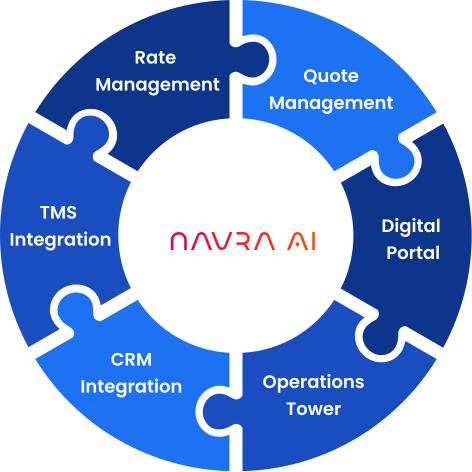


Freight forwarding teams lose time when insights arrive late and work stays manual. Documents are unstructured. Updates live in emails and spreadsheets. Velocity adds AI into daily workflows so teams can quote faster, reduce exceptions, and scale execution.
What You Get With Velocity’s AI Layer
Real-Time AI Insights & Analytics
Turn quotes and shipment activity into decisions, not dashboards.
- Detects quote trends like rate volatility, port delays, demand spikes, and competitiveness changes inside quote management.
- Predicts shipment delays, identifies customer preferences, and flags exceptions early so ops teams can act faster in the operations tower.
- Benchmarks carrier performance on transit time, missed sailings, and emissions, and uses market signals to forecast demand shifts for better routing decisions in operations tower.
- Velocity AI, described in how velocity uses ai, analyzes quotes and shipment signals in real time and surfaces next-best actions for pricing and service.
Automation & Intelligent Agents
Remove repetitive work and accelerate execution across the freight workflow.
- Automates quote generation via chat channels like WhatsApp so teams can respond faster from quote management.
- Parses data from invoices, bills of lading, and customs documents so records are structured for execution in the operations tower.
- Monitors carrier APIs to trigger proactive alerts, exception handling, and ETA updates, improving customer visibility in the digital freight portal.
- Matches freight invoices against bookings, rates, and shipment events to flag mismatches early and protect margin in rate management.
AI Agent Tools Built for Freight
Purpose-built agents that do real work inside your operating flow.
- Rate-sheet processor: Extracts complex rate sheets (PDF/Excel) and converts them into structured data for faster publishing in rate management.
- Network quote builder: Auto-triggers RFQs to eligible partners and consolidates responses into a quote draft in quote management.
- CRM copilot: Collects missing shipment details in a conversational flow and syncs inputs through CRM integration.
No-Code AI Builder
Build and adapt AI workflows without engineering tickets.
- Offers a drag-and-drop canvas to build logic chains using triggers, tools, and AI models so non-technical teams can design workflows faster.
- Supports multi-agent coordination so quoting, tracking, and documentation flows run as one process in the operations tower.
- Provides plug-in integrations with CRMs, TMSs, spreadsheets, databases, and messaging tools using TMS integration.
Model Context Protocol (MCP) & Integration Layer
The Model Context Protocol (MCP) is a game‑changing integration layer that simplifies how AI connects to logistics systems. Here’s a concise overview for your blog:
- Standardized interface for AI models: MCP acts as a universal translator, allowing AI agents to communicate with external tools and data sources through a single protocol instead of custom integrations.
- Plug‑and‑play AI agents : Unlike traditional APIs, MCP provides a universal layer that lets you deploy and swap AI agents quickly, enabling context‑rich interactions without re‑coding.
- Built‑in security and observability: The protocol includes mechanisms for access control, monitoring and auditing to ensure safe, transparent operations.
- Velocity’s contribution: Velocity has developed the first MCP server tailored to freight forwarders, accelerating time‑to‑automation by connecting rate engines, tracking tools and document systems out of the box.


Real-Time AI Insights & Analytics
Why This Matters for Forwarders
Velocity’s AI-powered freight platform integrates analytics, automation, and customizable agents so your team can:
- Quote faster with fewer back-and-forth cycles
- Reduce exceptions and missed handoffs
- Improve margin control by catching invoice mismatches early
- Scale operations without expanding manual workload
- Deliver proactive updates and a more consistent customer experience